 |
Black Sunday- Gasohol – Blue Monday – Goodbye to Brazil. (Map this!)
Nov 23rd, 2008: Black Sunday. Today was the worst day on our trip. Today, we found out that highest grade Brazilian gas that we have been filling in our car contains more than 20% (23%, to be exact) alcohol. This much alcohol can be damaging to the car’s fuel system and can cause major problems like fuel pump malfunction. So, we have decided to abandon our grand Amazonian adventure and leave Brazil by the shortest route.
|
|
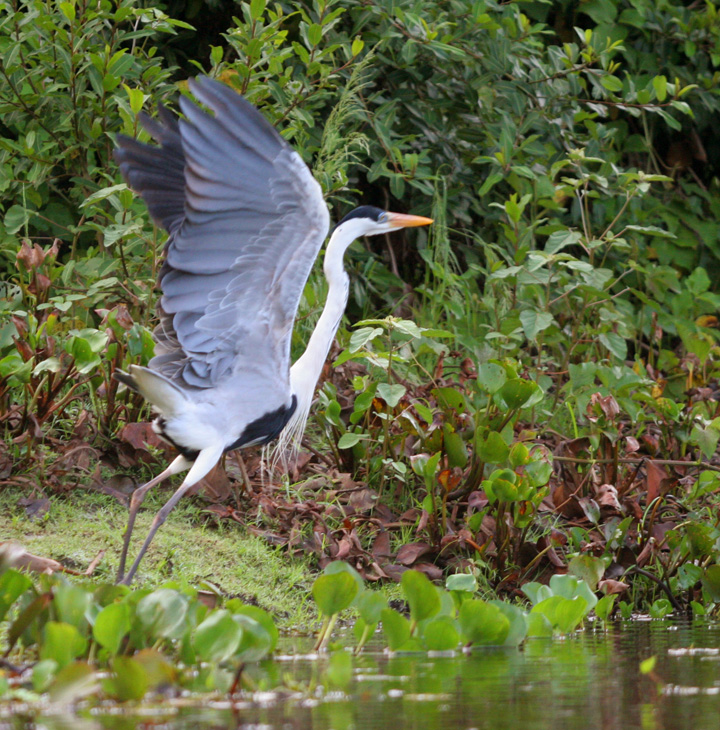
Flight of the Cocoi Heron |
In Guaranta do Norte, we were on the footsteps of the Amazon. We could see the dirt road that was to be our path through 700 miles of the Amazon jungle. Armed with hammocks and mosquito nets, water and food to keep us for a few days in case we were stranded and three bottles of insect repellent, we were ready to tackle anything.
This trip has been frought with difficulties. The rainy season has started, so the roads are muddy. We couldn’t find malaria prophylactic in Cuiabá, the last big city in Mato Grosso. (Malaria is prevalent in the jungle). Now this. We aren’t sure just how much damage such a high quantity of alcohol will cause, as no-one has tried it. We could go ahead with our grand adventure but this could put the larger goal of reaching Tierra del Fuego at risk. We decided to abandon ship.
|
|
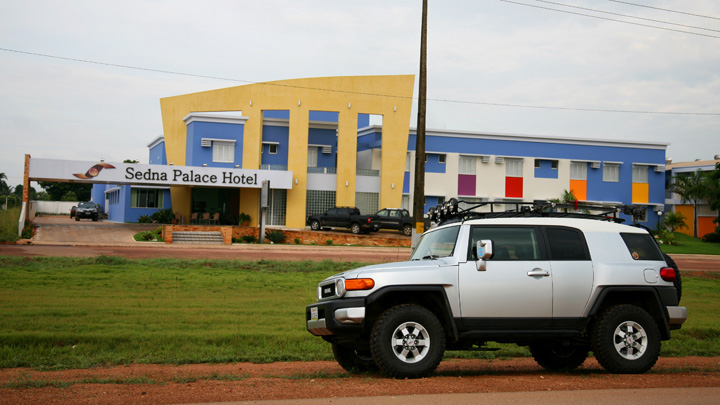
Returning South from Guaranta do Norte |
Nov 24th 2008: Blue Monday. We turned around and started south again towards Argentina. Brazil has been such a wonderful country. With its soft spoken and friendly people, with incredibly green farms stretching out to the horizon, with its melodious language. Brazil has been a joy to drive through, almost any city you stop at is guaranteed to have a nice hotel with AC, TV (if you care) and internet (which we need). Its lanchonetes (pronounced lanshonesh) and restaurants (res-tau-ranjes) with their amazing buffet spreads make stopping for lunch easy and quick. Its gems like the Amazon river, Salvador de Bahia and Belém which we will not see this time around.
|
|
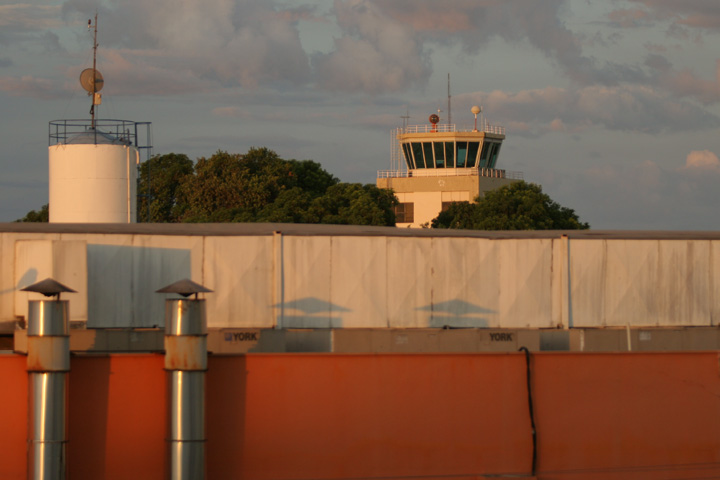
Sunset in Cuiabá |
Tomorrow we will see the bright side. We will form alternate plans to see at least Rio somehow or visit friends in Petrópolis. We will be happy to be in Argentina, the friendliest country (after Colombia) in South America, with its wine and great food. We will remember that we are on vacation on a trip that is the envy of a lot of people. But that’s tomorrow. Today I am sad.
Até Logo, Brazil.
That is indeed sad news 🙁 My brief visit to Brazil gave me a glimpse of the nice people and the lovely language. I was looking forward to hearing more about your travel there. But, I’m sure you two will make it back there soon. Enjoy Argentina.
Ah, what a tease to turn around so close to Amazon. Hope what Argentina offers overrides the disappointment.
Hi Guys,
Such a shame to waste fine Brasilian cane sugar alcohol in a gas tank. I’d rather it waste me, with an iced Capirina! Enjoy a fresh, oven warm, Pao Quejo for us.
Argentina in the Spring and Summer will be great!
Chris
Not sure were you are getting the info that the gasohol as when I read your article I did a quick research and didnt find anything that would indicate that your fuel system would be compromised. In fact the methanol is considered a cleaner for the fuel system as if burns cleaner. Just hate to see you cut a trip of that importance out of your agenda if you recieved false info. IMHO. Still in the end it is your decision and you must feel comfortable with it. Awesome trip!!!!! Love following your progress. Be Safe!!!
Lakshmi/Madhuri/Chris,
We are cooking up a plan to visit a friend in Rio Grande do Sul (on Argentinian gas!) and then maybe go to Rio and Ouro Preto by bus. Apparently it has rained a lot there and a lot of cities are under water.
Chris,
Ana’s friend contacted us from Porto Alegre. I am not sure that we will go there, but thanks for that!
Hi Wayne,
I agree that there are not too many reliable studies readily accessible on the internet. A Wikipedia article sums up alcohol based fuels.
The chart on the bottom, based on Volkswagen do Brasil, shows the parts of their cars that had to be modified for use with E20.
Other sources vary, from relatively benign to downright dangerous!
Hi Guys,
I can imagine your worries. I believe your truck doesn’t have to be a FFV (Flex-Fuel Vehicle) in order to run 10 percent ethanol. Any Toyota engine will handle that from what I understanding.
The problem start if you put 100% Alcohol which could damage the aluminum block corroding from the alcohol (I don’t think this is the case for Brazil’s gas).
When you arrive to Argentina follow this recommendations :
. Change your Air Filters as soon as you can.
. Perhaps change some lubricant hoses if you notice some damage also.
. Choose any injector cleaning additive (in Argentina the best branch name is Wagner Lockheed) and use a couple of bottle for the next 500 miles or so. Verified this with your owner manual first. Basically this should clean truck’s injectors.
. In Argentina, use “Super”, “V-Power”, or “Fangio” premium gas. There are two main reasons for that. One if to keep your engine clean and the second and most important,…. it is common in my country that gas’ station owners mix gas with water and this could be really dangerous for your truck.
I hope that helps and nothing serious have happened with your truck. Are you going to travel via Route # 14th ?. If so, let me know.
Regards,
Roberto
Hi Roberto!
Great to hear from you! The problem with Brazilian gas was that by law they have to add at least @ 20% alcohol, so the best companies seem to add 22-24%. This percentage changes yearly, based on their production of sugarcane. Last year, they had to add 25%!!!
Thanks for the recommendations. We are heading into Brazil again to visit a friend (on Argentinian gas!) who lives close to the border. Then we may visit other cities by bus, depends on our visa situation which is a bit complicated at the moment.
We were on part of Ruta 14 from Iguazu to Mocona. When we come back from Brazil, we will head via Rosario to the Carretera Austral. At least that’s the current plan!
O BRASIL é um pais muito lindo mesmo e o melhor de tudo é que eu moro aqui nesse paraíso!